
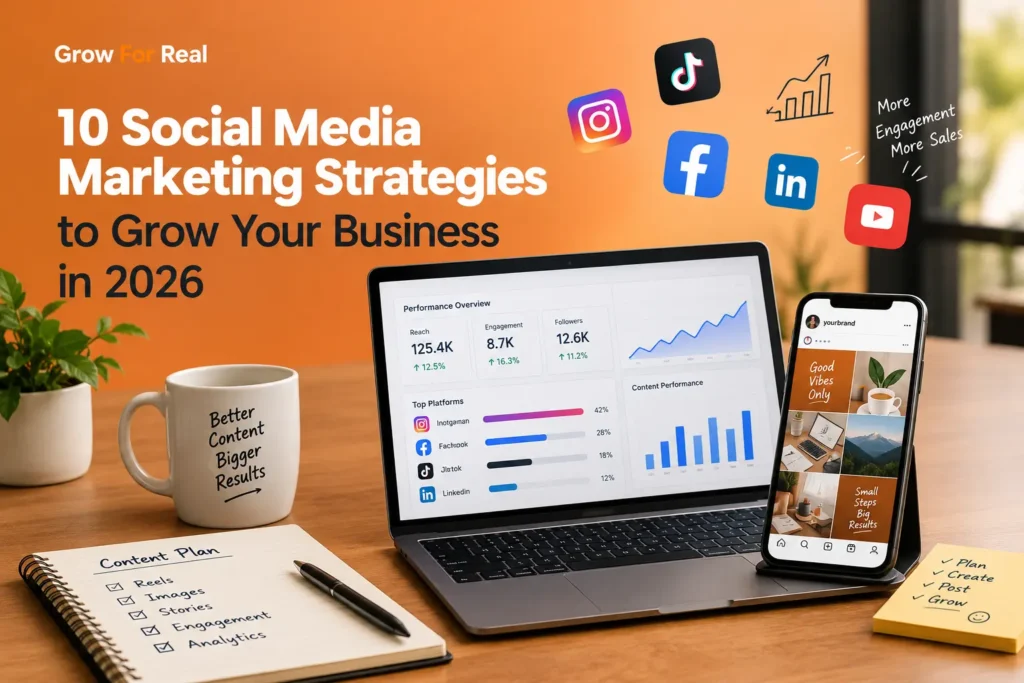
Social media has become an essential part of modern business growth. From small local businesses to established brands, companies use social platforms to reach customers, build trust, and increase sales. However, simply posting pictures, videos, or promotional offers does not guarantee success. Businesses need a clear plan to attract the right audience and turn attention into real results.
The right social media marketing strategies can help businesses improve their online presence, connect with potential customers, and generate valuable leads. In 2026, success depends on understanding your audience, creating useful content, using the right platforms, and measuring performance consistently.
Using effective social media marketing strategies helps businesses connect with their ideal customers and build lasting relationships online.
Table of Contents
In this guide, we will explore 10 practical ways to strengthen your social media presence and grow your business.
1. How to Set Clear Social Media Marketing Strategies and Goals
Before publishing content, decide what you want to achieve. Without specific goals, it becomes difficult to measure progress or identify what is working.
Your business might focus on increasing brand awareness, generating leads, driving website traffic, improving engagement, or increasing sales.
For example, a restaurant may want more table bookings, while an online clothing store may focus on product sales. These businesses need different content and campaign strategies.
Choose measurable goals and review them regularly. Instead of simply aiming for more followers, focus on outcomes that support your business objectives. This approach helps you make better decisions and use your marketing budget more effectively.
2. Understand Your Target Audience
Successful marketing begins with understanding the people you want to reach. Your content should address their interests, questions, challenges, and purchasing decisions.
Effective social media marketing strategies begin with understanding customer needs, interests, and online behaviour.
Start by researching your ideal customers. Consider their location, age group, interests, preferences, and the problems your products or services can solve.
You can gather useful information from customer conversations, comments, direct messages, social media insights, and website analytics.
For example, a fitness studio might create workout tips for beginners, while a local café could share popular menu items and behind-the-scenes videos.
When your content matches your audience’s needs, it becomes more relevant and encourages people to interact with your brand.
3. Create a Consistent Content Calendar
Consistency helps people recognise your brand and gives your audience a reason to return. However, publishing content without a plan can lead to repetitive posts and unnecessary stress.
A content calendar helps you organise ideas, schedule posts, and maintain a balanced publishing routine.
Include different types of content, such as:
- Educational posts that answer common questions.
- Entertaining videos that attract attention.
- Behind-the-scenes content that builds trust.
- Customer reviews and testimonials.
- Product demonstrations and service explanations.
- Promotional posts with clear calls to action.
Plan content weekly or monthly according to your resources and business goals. You do not need to post every day if doing so reduces quality.
Planning social media marketing strategies in advance helps businesses publish relevant content consistently.
A structured calendar makes content creation more manageable and helps your business maintain a consistent online presence.
Well-planned social media marketing strategies make it easier to maintain consistency and deliver relevant content to your audience.
4. Use Instagram Reels and Short-Form Videos
Short-form videos are useful for introducing your brand to new audiences and communicating information quickly. Instagram Reels, Facebook Reels, and YouTube Shorts offer opportunities to showcase products, explain services, and share useful ideas.
To create effective videos, start with an interesting opening that gives viewers a reason to keep watching. Deliver one clear message, use readable captions, and avoid unnecessary introductions.
For example, a skincare business could explain common skincare mistakes, while a restaurant could showcase food preparation or its most popular dishes.
You can experiment with tutorials, demonstrations, customer questions, relatable situations, and before-and-after examples where appropriate.
Rather than copying every trending format, focus on content that suits your brand and audience. Original, relevant videos can attract more valuable attention than trends that have little connection to your business.
5. Focus on Valuable and Original Content
People follow brands because they expect something useful, interesting, or entertaining. If every post promotes a product or asks people to buy something, your audience may lose interest.
Strong social media marketing strategies focus on educating, entertaining, and helping customers rather than promoting products in every post.
Create content that helps customers understand your industry, solve problems, compare options, or make better decisions.
For example, a digital marketing agency can publish website improvement tips, advertising advice, SEO explanations, and common marketing mistakes.
Use your own ideas, examples, and brand personality to make your content distinctive. AI tools can help with brainstorming, outlines, and captions, but review the results for accuracy and originality before publishing.
The goal is to provide genuine value while showing potential customers why your business is worth trusting.
6. Improve Audience Engagement
Social media is a two-way communication channel. Posting regularly is important, but building relationships also requires listening and responding.
Reply to comments, answer direct messages, acknowledge feedback, and participate in relevant conversations. You can encourage interaction through polls, questions, quizzes, and discussions related to your industry.
For example, a clothing brand could ask followers to choose between two designs, while a café might ask customers to vote for their favourite drink.
Pay attention to the questions people ask repeatedly. Their responses can reveal useful content ideas and help you understand customer concerns.
Focus on genuine conversations rather than artificial engagement tactics. Meaningful interactions can strengthen relationships and help potential customers feel more comfortable contacting your business.
7. Optimise Your Social Media Profiles
Your social media profile often creates the first impression of your business. When someone discovers your content, they should quickly understand what you offer and how to contact you.
Make sure your profile includes a recognisable logo or profile picture, a clear business description, relevant contact details, and a link to your website or enquiry page.
Use your bio to explain who you help and what makes your business useful. For local businesses, mentioning the service area can help attract relevant customers.
You can also organise story highlights and pinned posts around services, frequently asked questions, testimonials, and important information.
An organised profile makes it easier for visitors to move from discovering your brand to taking the next step.
8. Use Paid Social Media Advertising
Organic content helps businesses build relationships, while paid advertising can expand reach and target specific audiences. Platforms such as Meta Ads allow businesses to create campaigns for awareness, website traffic, leads, and sales.
Before launching a campaign, define your objective, audience, budget, offer, and desired outcome.
Create advertisements with clear messaging, relevant visuals, and a strong call to action. Test different creatives and audiences to identify which combinations perform best.
Track meaningful results, including qualified leads, conversion rates, and customer acquisition costs. High impressions or clicks do not necessarily mean a campaign is profitable.
Also, ensure your website or landing page works properly and that enquiries receive timely follow-up.
Combining organic content with paid campaigns can make social media marketing strategies more effective when both support clear business goals.
When planned carefully, paid advertising can complement organic content and help businesses reach customers who are more likely to take action.
9. Collaborate With Relevant Creators and Businesses
Collaborations can introduce your brand to people who may not have discovered it independently. Consider working with creators, influencers, or complementary businesses whose audiences match your target market.
For example, a restaurant could collaborate with a local food creator, while a fitness studio could partner with a sportswear business.
Choose partners based on audience relevance, credibility, content quality, and engagement rather than follower count alone.
Before starting a collaboration, agree on the campaign objective, deliverables, timeline, budget, and performance measures.
Relevant partnerships can increase brand awareness, create useful content, and build trust with potential customers. Make sure sponsored partnerships are disclosed appropriately and that the content feels natural to the audience.
10. Track Results to Improve Social Media Marketing Strategies
Effective marketing requires regular evaluation. Analytics help you understand which activities are producing results and where improvements are needed.
Monitor important metrics such as:
- Reach: The number of unique accounts that see your content.
- Engagement: Likes, comments, shares, saves, and other interactions.
- Profile visits: The number of people exploring your business profile.
- Link clicks: The number of people visiting your website or landing page.
- Conversions: Enquiries, bookings, purchases, or other desired actions.
Use the analytics tools available on your social platforms and website. Review your results regularly and compare performance against your original goals.
You can use Instagram Insights to understand how your content performs and learn more about your audience.
For example, if educational videos attract relevant enquiries while generic promotional posts receive little response, consider creating more helpful content around customer questions.
Remember that results take time and vary by industry, audience, budget, and execution. Use performance data to guide improvements rather than making decisions based on likes alone.
Frequently Asked Questions About Social Media Marketing
What are the best social media marketing strategies for businesses in 2026?
The best social media marketing strategies include creating valuable content, understanding your target audience, posting consistently, using short-form videos, engaging with followers, running targeted ads, and tracking performance. Businesses should choose strategies that align with their goals and customer needs.
How can social media marketing help grow a small business?
Social media marketing helps small businesses increase brand awareness, connect with potential customers, showcase products or services, and generate enquiries. With consistent content and a clear strategy, businesses can build trust and reach relevant audiences without relying entirely on expensive advertising.
How often should a business post on social media?
Posting frequency depends on your audience, platform, and available resources. Many businesses can start with three to five quality posts per week and adjust based on performance. Consistency and useful content are generally more important than publishing frequently without a plan.
Is paid social media advertising better than organic marketing?
Neither approach is always better. Organic marketing helps businesses build relationships, credibility, and a community over time, while paid advertising can help reach targeted audiences and generate leads more quickly. Combining both approaches can support a balanced social media marketing strategy.
Conclusion
Growing a business through social media requires planning, creativity, consistency, and continuous improvement. From understanding your audience to creating engaging videos and measuring conversions, every activity should support a clear business objective.
Start with a manageable content plan, test different approaches, and focus on the activities that deliver meaningful results. You do not need to implement everything at once; steady improvements can help build a stronger digital presence over time.
At Grow For Real, we believe that effective digital marketing should go beyond likes and followers. It should help businesses build trust, reach the right people, and create opportunities for growth.
If you want to strengthen your brand’s online presence, explore our social media marketing services to discover how a tailored strategy can support your business goals.
The best social media marketing strategies are those that match your audience’s needs and produce measurable business results.
Ready to grow your business? Visit Grow For Real and take the next step towards building a stronger online presence.